Whilst ‘official’ UK government policy continues to vacillate on a range of issues – sustainable planning for the 21st century simply must shift away from its current dependency on road traffic towards mixed transport options. This will offer long-term social, environmental and economic benefits.
This is what we are now seeing in many other parts of Europe where heavy investment in trains, trams, buses and cycle infrastructure has been backed-up with subsidised incentives to encourage a faster shift away from car travel. Super-cheap travel passes are now available in Germany, Austria and Spain and completely free public transport is provided in places like Luxembourg, Malta and a number of European cities.
Even in cities in England, local policy is now backing public transport – most recently with the launch of the ‘Bee Buses’ in Manchester as part of a new integrated public transport system including a fleet of 50 electric buses. As well as reduced congestion and cleaner air, the scheme is aimed at bringing back passengers to a system that became increasingly unattractive to people under a deregulated private competition system.
The oft-quoted reason for not backing more public transport is cost. But when a new 1.5-mile stretch of single carriageway road to provide access to housing planned at King’s Lynn is now estimated to cost £85m (even before it is fully designed and tendered), is continued car dependence really a cheaper option? Ultimately such costs are all from the public purse. We need to spend our money on the best long-term solutions.
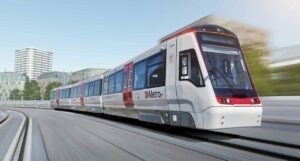
Based on cost-benefit analysis, Network Rail are now favouring ‘Tram-Train’ systems, which can run on traditional ‘heavy rail’ lines, but are also safe to run on ‘light rail’ tracks as the design allows flexibility on platform design. This means that they can facilitate extensions from existing rail corridors into town centres and new developments – with low-speed sections in street situations and fast connections on rail lines.
Other advantages include the reduced cost of infrastructure for features such as level crossings and stations, as well as the benefits of clean, electrified, mass transit vehicles. They are now widely used in Europe and have been introduced as part of the modernisation of the railways in South Wales.
Network Rail are now supporting Tram-Trains as the preferred system for the March to Wisbech and Cambridge to Haverhill rail reopening projects – where they envisage that additional spurs could be provided into planned housing development at Wisbech and existing business parks at places like Babraham and Sawston.
It is envisaged that a sub-regional Tram-Train fleet could also run on heavy rail lines to provide connections to Peterborough, Ely, Cambridge and Newmarket. It does not take a genius to realise that extending those ideas to King’s Lynn and Hunstanton makes absolute sense. And why not a King’s Lynn link to Peterborough via Wisbech and Norwich via Swaffham and Dereham?